Esna Temple Egypt

Programme 2026 to 2027

We have an exciting programme for 2026-27

SCROLL DOWN TO SEE THE ENTIRE ANNUAL PROGRAMME WHICH INCLUDES AN OVERVIEW OF EACH TALK

TO DOWNLOAD IT FOR A QUICK VIEW IN PDF FORMAT – CLICK THE BUTTON BELOW 

Jacky_Finch

25th September 2026

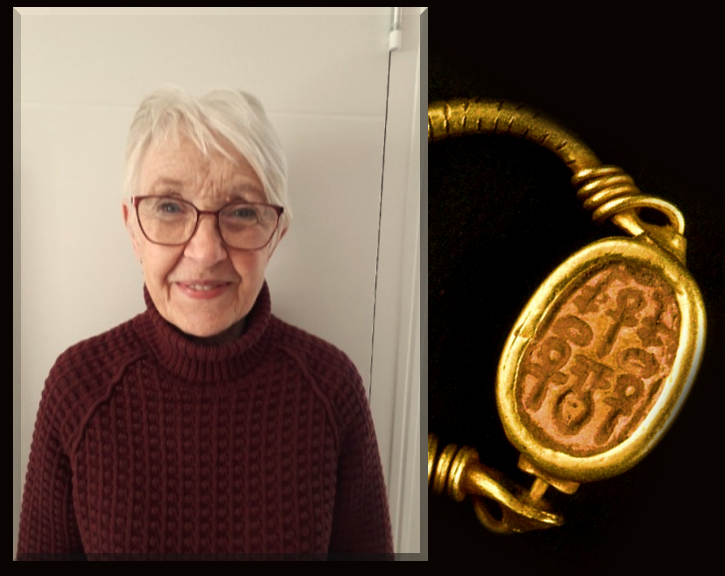
Dr Jacky Finch 

Wonderful Things: Understanding Ancient Egyptian Jewellery

Jewellery was worn by all levels of ancient Egyptian society but not just for personal adornment. This lecture will include images of both the modest and the exquisite from all periods of ancient Egyptian history. Concentrating on their form, composition and iconography the lecture aims to equip the listener with the skills to read each piece and thus unlock their true significance.
Dr Jacky Finch studied at the KNH Centre for Biomedical Egyptology at the University of Manchester, gaining an MSc in Biomedical and Forensic Egyptology. Her PhD focused on ancient Egyptian prosthetics and disability in the ancient world. She has spoken at conferences, to a wide range of interested societies, and has organised day schools for Key Stage 2. She is currently a Researcher at the University of Manchester.
Rachel_Mary_Wright

23rd October 2026

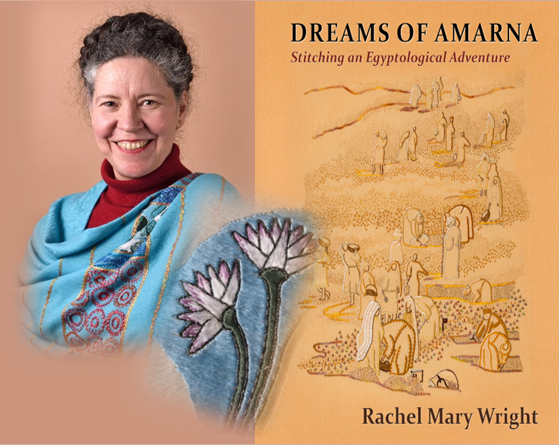
Rachel Mary Wright

An Artists Eye on Amarna

Rachel describes the adventure of learning to be
an artist, inspired by excavations at Amarna and the writing of Mary
Chubb. 
Rachel Mary Wright is a textile artist, researcher and writer based in Port Sunlight, in the UK. She has been blogging now for over twenty years, and shows no signs of stopping. She first fell in love with colour and texture, with the magical effects available when both are chosen justly, enhancing and supporting one another. Then she became aware that those things together could speak of greater – or at least, other – things. So now she tells stories in stitch.
Ian_Trumble

27th November 2026

Ian Trumble

Amarna and the Princess: How our obsession with a heretic masked a forgery

This talk explores the history of the Amarna period and the excavations at the city of Tell el-Amarna as a backdrop to understanding one of the world’s greatest forgeries and how it became possible.
Bryony_Renshaw

22nd January 2027

Bryony Renshaw

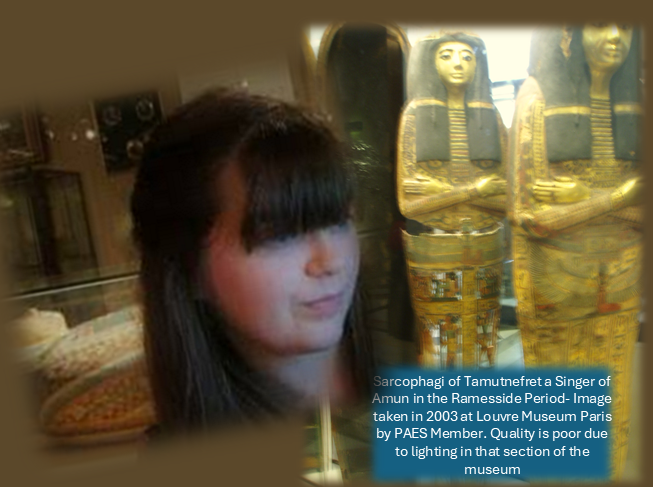
The Singers of the Interior of Amun: A Chorus of Confusion

The singers had unique duties to perform, they sang hymns and played sacred instruments to please the gods and to help keep the cosmos in order. They usually came from wealthy and elite Egyptian families. To perform those duties they had to commit to living a pure life as their performance was in the sacred parts of the temple.
Bryony is a PAES Committee Member.
Campbell_Price

26th February 2027

Dr Campbell Price

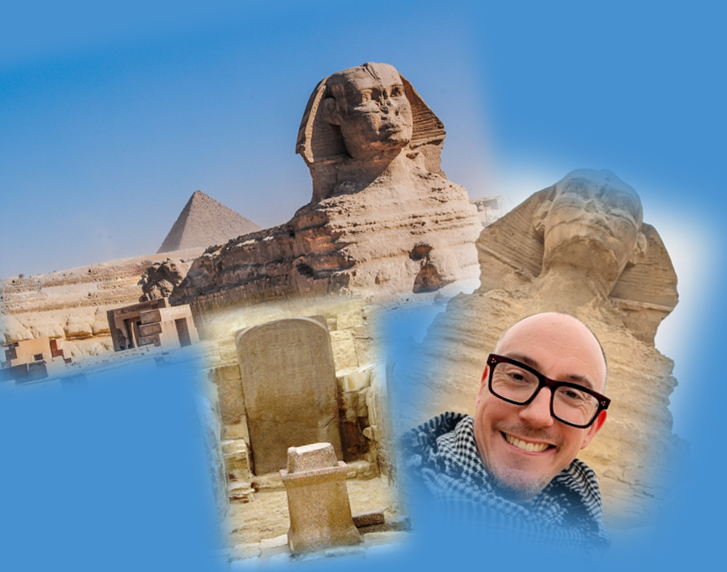
The Meaning of the Sphinx in Ancient Egypt

The sphinx is quintessentially ancient Egyptian. It typifies the Pharaonic means to depict the hybrid (and therefore divine) nature of the king. Egyptian sphinxes stand quite apart from their Greek counterparts, but their purpose in context is rarely discussed. What is a sphinx actually for? This lecture questions their assumed role as guardians and explores the meaning and manufacture of one of ancient Egypt’s most enduring symbols.
Dr Campbell Price is Curator of Egypt and Sudan at the Manchester Museum, one of
the UK’s largest Egyptology collections. He is an Honorary Research Fellow at
the University of Liverpool and was Chair of the EES Board of Trustees from
2021 to 2025. He is the author of several books, most recently Brief
Histories: Ancient Egypt
(Orion, 2024) and (with Stephanie
Boonstra) Ancient Egypt in 50 Discoveries (Egypt Exploration Society,
2025). 
Claire_Ollett

19th March 2027

Claire Ollett

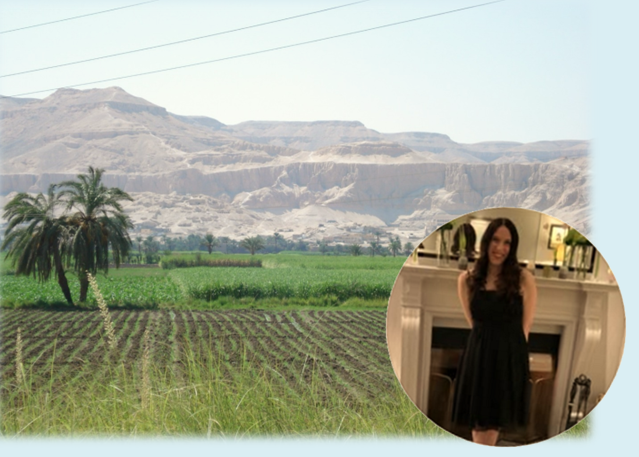
Why the Valley of Nebhepetre?

Hatshepsut’s Temple, Djeser-djeseru is
situated within the great bay of cliffs at Deir el-Bahari, to the north of the
temple of Nebhepetre Montuhotep II. In the New Kingdom, this location was known
as the Valley of Nebhepetre after the founder of the first temple to be built
within this natural rock amphitheatre. This talk examines the multi-faceted reasons Hatshepsut may have chosen this specific location for her ‘Mansion of Millions of Years’ and examines what it signifies in terms of the agenda of her reign.
Claire has a First Class Honours degree and a Masters degree (Distinction) in Egyptology from the University of Liverpool and won the prestigious Duncan Norman Research Scholarship to study her PhD at the same university. She has worked on funded Egyptological research projects, most notably the ‘Garstang Project’ which focussed on the excavations of Professor John Garstang in Egypt and she co-designed a resultant exhibition. She has also had research papers, delivered at academic conferences across Europe, published in peer-reviewed publications and she also worked in an advisory capacity to the international exhibition, Tutankhamen: His Tomb and His Treasures, in both Manchester and Dublin, where she also trained all of the tour guides. Over the last 18 years she has worked closely with different museums to design and deliver tailor-made Egyptology sessions in those museums, as well as in schools, and she is a regular speaker at numerous societies across the country (both specialist and non-specialist audiences).
Queen_Tiye

23rd April 2027

Jenny Smith

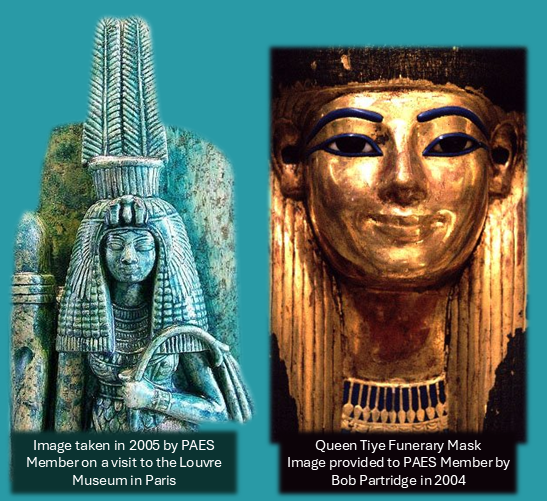
Queen Tiye

full title and description to be updated shortly
Jenny is a PAES Member
Michelle_Keeley_Adamson

28th May 2027

Michelle Keeley-Adamson

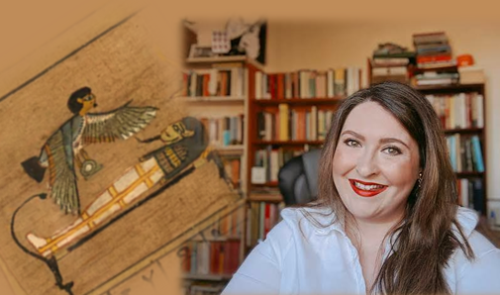
Haunted: Ancient Egyptian Ghosts in the Popular Imagination

This talk aims to explore the histories and the reasons
why, in the United Kingdom, we are haunted by the ancient Egyptian dead,
exploring accounts from ancient Egypt up to the modern day. Beginning in ancient Egypt, we will explore early ‘ghost’ stories, before moving through time to consider how the ancient Egyptian ‘ghost’ story found a place in gothic tales, before reaching the modern day, where tales of the ancient Egyptian dead returning to haunt us take on a new life in folkloric and paranormal accounts.  When we reach the modern day, and encounter tales of ancient
Egyptian ghosts in online forums, in books, articles, podcasts, and TV shows,
we are left with the question: why are we still ‘haunted’ by the ancient
Egyptian dead, and what does it say about us?
Michelle Keeley-Adamson (She/Her) is a historian and writer. Her history work focuses on the reception of ancient Egypt and she holds an MA in Egyptology from the University of Liverpool. Michelle is the Co-Chair of the International Society for the Study of Egyptomania (ISSE). As a working class person, Michelle strives to contribute to making the field more accessible. 

Sarah_Griffiths

25th June 2027

Sarah Griffiths

The Power behind the Throne: The Pooh-Bahs of the Middle Kingdom

The reunification of Egypt by Mentuhotep II in c. 2016 BC
saw the return of strong centralised control to Egypt, with rich pickings for
those in positions of power. The courtiers of the Middle Kingdom were some of
the wealthiest of Egypt’s elite, and eager to promote their achievements on
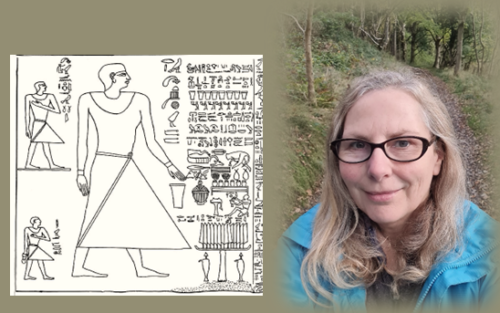
stelae and tomb walls. Sarah Griffiths introduces us to four of the most powerful courtiers of the 11th and 12th Dynasties who, like Pooh-Bah from Gilbert and Sullivan’s Mikado, were the “Lords of Everything Else”, ruling Egypt on behalf of Pharaoh – with one eventually becoming Pharaoh himself. Through their stories, we can also trace the development of Egypt’s extraordinary administration system, innovations in funerary provision and the beginnings of Egypt’s golden age of art and literature. The images of this actual stela are pretty poor so the drawing is better if you can use this? Drawing of the stela of Tjetji from the British Museum. Credit Scott Moncrieff
Sarah Griffiths is Deputy Editor of Ancient Egypt Magazine and Secretary of the Manchester Ancient Egypt Society, and spent two seasons as a member of the Spanish University of Jaen team excavating an ancient necropolis near Aswan. She holds a BSc Hons degree in Zoology, an MSc in Animal Breeding and the University of Manchester’s Certificate in Egyptology. She regularly presents lectures and study days in Egyptology, covering a wide range of topics and eras. In a previous life she taught science in secondary schools in the UK and Hong Kong and worked for the BBC for 17 years in radio, television, and project and partnerships management.